


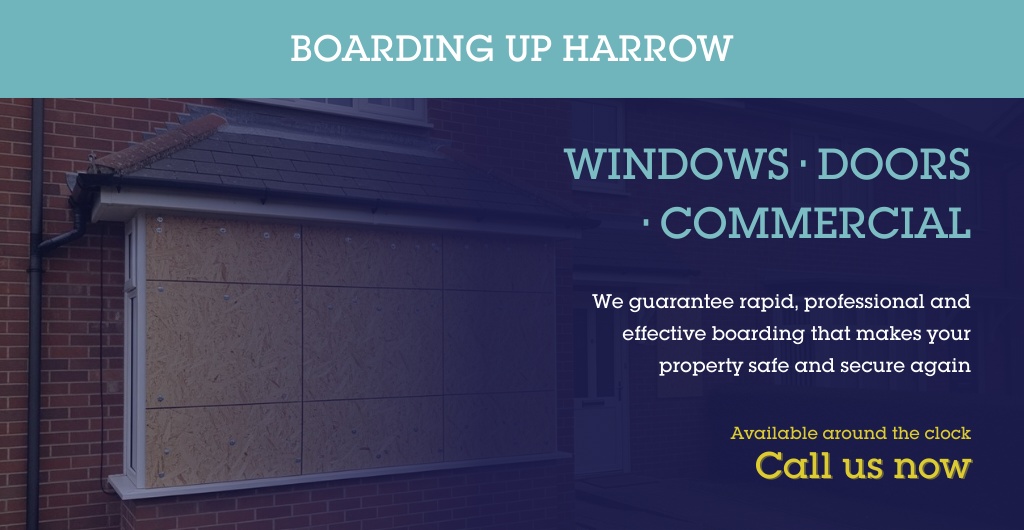
Residential Boarding Up in Harrow (HA0–HA9)
When something goes wrong at home—a smashed window, a kicked-in door, storm damage, or even a small fire—the priority is simple: make the property safe and secure. We provide residential boarding up in Harrow and across the HA postcodes (HA0–HA9), helping homeowners, tenants, landlords and managing agents secure houses, flats and maisonettes quickly and professionally.
If you’re dealing with an urgent situation, you don’t need a long checklist—you need a calm plan and a reliable team. We’ll talk you through the safest next steps, then secure the opening using the right method for the property and the type of damage.
For urgent help, see emergency boarding up.
The types of homes we secure across Harrow
Harrow’s housing stock is varied, and the right boarding method often depends on what you live in.
- 1930s semis and terraces are common around areas like Kenton, Rayners Lane and Headstone—often with bay windows and older timber frames that need careful fixing to avoid splitting.
- Victorian/Edwardian properties (including conversions into flats) appear in pockets closer to central Harrow and Harrow on the Hill—often with taller sash windows and shared entrances.
- Purpose-built flats and newer developments near transport links (for example around Harrow-on-the-Hill station and parts of Wembley) may have communal access rules, concierge/security, or strict working hours.
Whether it’s a ground-floor window on a quiet residential road or glazing on an upper level that needs safe access, our job is the same: secure the home without creating extra damage or unnecessary mess.
Common residential scenarios (and what we usually do)
Most calls fall into a handful of real-world situations. Here’s what tends to happen in Harrow homes and how we typically handle it.
1) Break-ins and attempted break-ins
A forced entry often leaves:
- shattered glass
- damaged locks or frames
- a door that won’t close
- a window that’s been popped from the beading
In these cases we focus on immediate security first, then practicality—especially if you still need to live in the property. Depending on the damage, we may board the window, board the door opening, or install a more robust temporary option until permanent repairs are done.
Related guidance: burglary repairs and boarding up.
2) Vandalism (including targeted window damage)
Residential vandalism can be random—stone through a window—or related to disputes. Ground-floor windows, side alleys and rear access points are common vulnerabilities, particularly where there’s a footpath or cut-through behind the property.
We’ll secure the opening using anti-tamper fixings where appropriate, so the board can’t simply be removed from outside.
See: vandalism repair and boarding.
3) Storm damage and fallen debris
High winds can take out:
- panes in older frames
- glazing in conservatories
- rooflights and skylights
- fencing panels that then impact windows
The priority is weatherproofing as well as security—especially if rain is coming in and there’s a risk to electrics or ceilings.
See: storm damage boarding and our roof boarding service.
4) Fire damage (after the fire service has finished)
After a fire, even if it’s contained to one room, windows may be broken, doors can be compromised, and the property may be left vulnerable while investigations or drying works take place.
We’re not a fire restoration company and we don’t provide smoke or odour remediation—but we can secure openings and help reduce the chance of further loss.
See: fire damage boarding.
5) Flooding and water damage
Flood water can swell timber doors and frames so they won’t close properly. It can also weaken fixings around openings. Boarding up after flooding needs a bit more judgement—sometimes the best approach is to secure the property while allowing controlled ventilation to help drying (depending on insurer/restoration advice).
See: flood damage boarding.
6) Accidental impact (DIY mishaps, kids’ footballs, vehicle knocks)
Not every incident is criminal. A cracked pane can become a full break quickly, and a damaged door panel can be surprisingly easy to force.
See: accident damage boarding.
How residential boarding up works (step by step)
People often call us stressed and unsure what happens next. Here’s the usual process:
-
You tell us what’s happened
We’ll ask what’s been damaged (window/door/rooflight), whether the property is occupied, and if there are any immediate hazards (loose glass, unsafe frame, exposed electrics). -
We assess on arrival
We check the condition of the frame and surrounding structure. If the frame is too damaged for a straightforward, non-destructive fix, we’ll explain the options before proceeding. -
We choose the right method and material
- 18mm exterior-grade plywood is commonly used for strong, secure boarding on larger window openings.
- 12mm OSB can be suitable for smaller or less exposed openings where appropriate. We select fixings based on the frame type (timber, masonry reveal, uPVC condition, etc.) and the risk level.
-
We secure and tidy
We board the opening to reduce risk of entry and weather ingress. We keep the work area as tidy as possible and can advise on any immediate safety concerns. -
Documentation for peace of mind and insurance
Where needed, we can provide an itemised invoice and a clear description of works. Many customers also ask for time-stamped photos for their insurer or landlord/property manager records.
If you’re comparing options, our explainer page is useful: what is boarding up?
Methods we use in homes (and why)
Residential boarding isn’t one-size-fits-all. The method depends on the opening, the property type, and how long it needs to stay secure.
Window boarding for houses and flats
Window boarding is the most common call-out for homes. We board:
- front bay windows
- side windows by alleyways
- rear patio/utility windows
- communal stairwell windows (with the right permissions)
We use fixings that suit the substrate and aim to avoid unnecessary damage. In some cases we can secure internally; in others, external boarding with anti-tamper fixings is the safest approach, especially if the property will be unattended.
Learn more: window boarding in Harrow.
Door boarding and stronger temporary security
If a door has been forced, boarding is sometimes the immediate option—but for many residential break-ins, a temporary steel door (or a more robust temporary solution) may be more practical if:
- the property is vacant
- the door frame is heavily compromised
- you need secure access for trades/insurers
See: door boarding in Harrow.
Shopfront-style boarding on ground-floor flats or mixed-use buildings
In parts of Harrow, residential flats sit above or beside commercial units. If glazing is large-format (similar to a shopfront), it may require larger boards, stronger fixings and extra consideration for public-facing pavement areas.
See: shopfront boarding.
Rooflights and skylights (common after storms)
A broken skylight or rooflight is a fast route for rain and repeat damage. Roof boarding needs safe access and careful fixing to minimise further harm to the roof covering.
See: roof boarding.
Occupied homes vs vacant residential properties
If you’re living in the property
We understand that boarding up is disruptive. Where possible we’ll:
- secure the damaged opening while keeping the home usable
- talk through safe access/egress (especially if a main door is affected)
- advise what to do next for glazing/lock replacement
If children or pets are in the home, tell us—loose glass and splinters change how we approach the immediate area.
If the property is empty (between tenants, probate, renovation)
Empty homes can be targeted repeatedly, especially if the first incident makes it obvious the property is unoccupied. In those cases, you may want something more robust than basic boarding.
See: vacant property boarding up.
Local coverage: residential boarding up across HA0–HA9
We cover residential properties across Harrow and nearby HA districts—whether you’re in a quiet residential crescent or close to a busy high street. Common areas we attend include:
- boarding up Harrow HA1
- boarding up Kenton HA3
- boarding up Rayners Lane HA2
- boarding up Pinner HA5
- boarding up Stanmore HA7
You can also browse the full list here: areas we cover.
Practical guidance if your home is damaged
A few steps can make things smoother—especially after a break-in or storm:
- If there’s a crime, call the police first and keep your crime reference number.
- Take photos if it’s safe (from a safe distance, don’t handle broken glass).
- Don’t clear everything away immediately if your insurer may need evidence—ask them what they require.
- Keep children and pets away from the damaged area.
- If water is coming in, move valuables away from the opening and place towels/buckets to reduce internal damage until it’s secured.
For claims support and the sort of paperwork insurers usually ask for, see insurance claims help.
FAQs: residential boarding up in Harrow
Can you board up a window on a flat in Harrow with communal access?
Yes, but access and permissions matter. If it’s a communal area (stairwell, shared entrance, managed block), we may need confirmation from the managing agent or freeholder, or access arranged via a concierge/caretaker. We’ll talk through what’s needed when you call.
Will boarding up damage my window frame or brickwork?
The goal is to secure the opening while keeping additional damage to a minimum. The fixing approach depends on the frame type and condition. If the frame is already split or unstable, we’ll explain the safest option before starting.
How long can the boarding stay in place?
It depends on exposure, the size of the opening, and whether the property is occupied. Boarding is often used as a short-term security measure while glazing/door repairs are arranged, but we can also advise on more suitable medium-term solutions for empty homes.
Is boarding up covered by home insurance?
Often it can be, especially after burglary, vandalism or storm damage, but policies vary. We’re not loss adjusters, but we can provide clear documentation of the works carried out to support your claim. More detail here: insurance claims.
Do you provide boarding up across the full HA postcode area?
Yes—HA0 through HA9. If you’re not sure which page applies to your neighbourhood, start with areas we cover.
Ready to secure your home?
If your house or flat has been damaged, we can help you secure it and reduce the risk of further loss.
Ready to get started? Call 020 4634 5472 or email us for a free, no-obligation quote.
